
Our School Vision
Our school is a community where each person is valued as a child of God. We are a Church of England school, inspired and guided by the life and teaching of Jesus. We work together to create a caring, friendly and safe school family, to enable the whole school community to flourish and each person reach their full God-given potential.
This document is devised to support this vision, and has the following intentions:
· Pupils are empowered to develop the hope and perseverance necessary to engage the challenges of Science in the context of school and the wider world.
· Teaching staff seek out every opportunity to ensure that all pupils flourish in Science lessons, developing wisdom and creativity through an ambitious and broad curriculum that challenges expectations, deepens knowledge and develops skills.
· Science lessons are inclusive, so everyone is valued and respected – and tolerance and diversity are celebrated.
Intent
Donnington Wood Junior School places great importance on science and scientific inquiry. Our aim is to cultivate a vibrant and engaging curriculum that sparks the curiosity of the next generation and empowers them to thrive in the field of science. We are committed to aligning with the national curriculum while nurturing a deep interest in scientific exploration. Central to our approach is fostering a spirit of inquiry through hands-on scientific investigations. Our goal is to equip students with the skills and knowledge needed to pose and answer meaningful scientific questions throughout their lives. We view science education as encompassing the acquisition of knowledge, concepts, skills, and positive attitudes. Through our curriculum, based on the White Rose Science programme, students will progressively acquire key knowledge and develop essential scientific skills. We ensure that students continually build upon and refine their scientific inquiry skills, enabling them to confidently apply their understanding of science in practical settings, articulate arguments, and remain curious about the world around them.
Our Science curriculum is focused upon the following beliefs:
· Children will take an active part in science lessons.
· Children will enjoy exploring scientific concepts.
· Children will develop a deeper understanding of the science curriculum.
· Children will understand the relevance of science in the real world.
Implementation
At Donnington Wood Junior School, we adhere closely to the National Curriculum guidelines for Science education, ensuring comprehensive coverage of all units as outlined in statutory guidance. Our approach is underpinned by the meticulously crafted White Rose Science Curriculum, which is structured to facilitate skill development and knowledge progression.
The sequencing of units in the White Rose Science Curriculum is strategically planned to optimise learning opportunities throughout the academic year. For instance, the study of Plants is consistently scheduled for the summer term of Year Three, allowing students to engage with outdoor learning experiences during this thematic unit.
Through the White Rose curriculum overview, we meticulously chart when each unit is taught across all year groups. Our progression map illustrates the incremental development of skills and knowledge, ensuring that students achieve proficiency in line with attainment targets by the culmination of each key stage (LKS2 and UKS2).
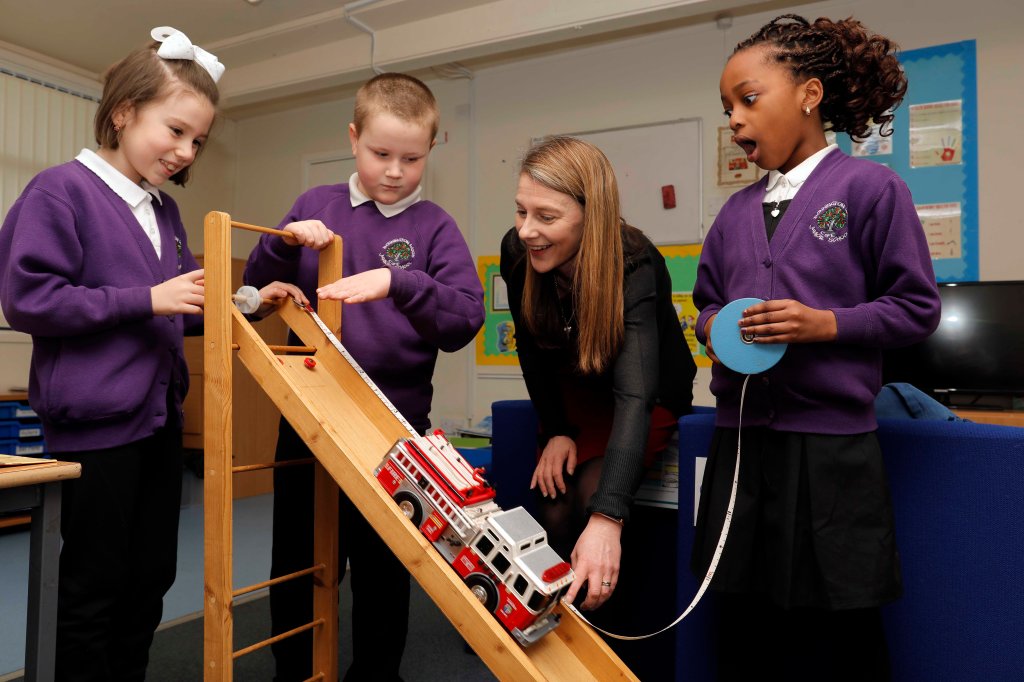
At the core of our Science education philosophy lies the cultivation of scientific inquiry skills through the Working Scientifically approach. This ethos permeates across all strands and year groups, with a deliberate emphasis on hands-on learning experiences. Our curriculum integrates practical investigations and opportunities for students to hone their scientific inquiry skills progressively.
At Donnington Wood Juniors, we champion an active learning environment where students are encouraged to engage directly with scientific concepts. The inclusion of inquiry questions and practical activities in every lesson empowers students to conduct scientific inquiries independently or collaboratively, fostering a collaborative learning environment.
By prioritising experiential learning, we aim to instil in our students a lifelong enthusiasm for science and equip them with the necessary skills to thrive in secondary education and beyond.
The National Curriculum for Science aims to ensure all pupils:
· develop scientific knowledge and conceptual understanding through the specific
disciplines of Biology, Chemistry and Physics
· develop understanding of the nature, processes and methods of science through
different types of Science enquiries that help them to answer scientific questions about
the world around them
· are equipped with the scientific knowledge required to understand the uses and
implications of Science, today and for the future.
Impact
By the conclusion of Key Stage 2, our Science curriculum aims to have the following effects on pupils:
• Children will derive enjoyment from Science and progressively gain confidence in recalling scientific knowledge while demonstrating conceptual understanding across biology, chemistry, and physics.
• Children will express enthusiasm about their learning experiences and display eagerness to advance in Science.
• Pupils will develop fluency, competence, and efficiency in planning, executing, and evaluating tests and fieldwork.
Pupil Assessment and Attainment
During lessons, children’s progress is gauged through observations, targeted questioning, marking, annotating children’s work, and other Assessment for Learning methods. These measures support short-term teaching and learning planning and development.
• Summative assessments involve utilising White Rose Summative Assessment, with tracking facilitated through a comprehensive school database. This aids teacher assessment throughout the year, as well as assists Subject Leaders and Senior Leadership Teams in monitoring data for subject and whole-school planning and targets.
School Improvement Planning
The subject leader assesses the implementation’s impact through various monitoring activities, including learning walks, staff and pupil questionnaires, pupil voice initiatives, examination of pupil work evidence, analysis of teacher assessments and any other pertinent evidence.
The subject leader conducts an evaluation of the impact and outlines plans for future subject development for both pupils and staff.
The subject leader devises an action plan aimed at creating new opportunities, refining current practices, planning Continuing Professional Development (CPD) for staff.
 Donnington Wood Church of England Junior School