




Our School Vision
Our school is a community where each person is valued as a child of God. We are a Church of England school, inspired and guided by the life and teaching of Jesus. We work together to create a caring, friendly and safe school family, to enable the whole school community to flourish and each person reach their full God-given potential.
Our History curriculum has been devised to support this vision, and has the following intentions:
Pupils are empowered to develop the hope and perseverance necessary to engage the challenges of history in the context of school and the wider world.
Teaching staff seek out opportunities for all pupils to flourish in history lessons, developing wisdom and creativity through a broad, ambitious curriculum that challenges expectations, deepens knowledge and develops skills.
History lessons are inclusive, so everyone is valued and respected – tolerance and diversity are celebrated.
INTENT
At Donnington Wood CE Junior School, we value the importance of History in supporting children’s understanding of the world around us and the events and people who have impacted and shaped how we live today. We recognise the importance of exposing our children to this journey in order for them to recognise their own place in history and their cultural heritage. Knowing and understanding more about key events, people and changes in history supports children in having a greater awareness and tolerance over how we live today. Within the history curriculum, our intent is to enthuse and develop children’s own historical curiosity and questioning. We aim to inspire our children to want to find out more about the world they live in.
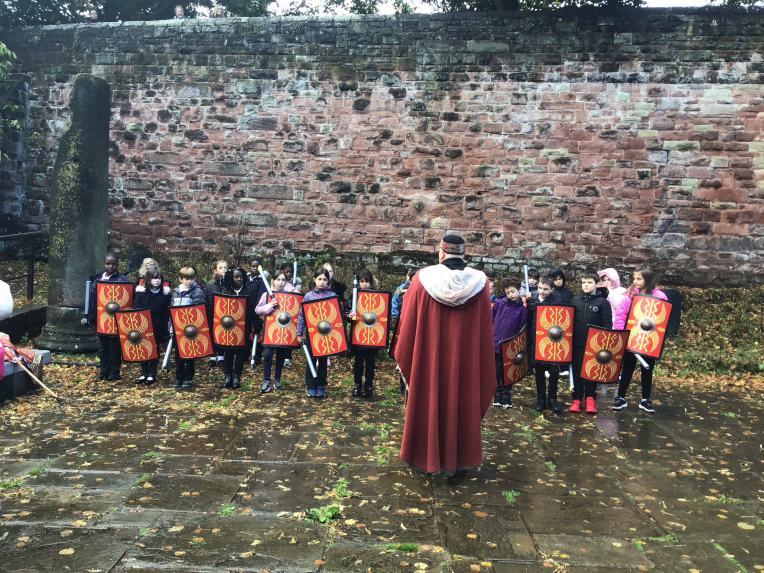
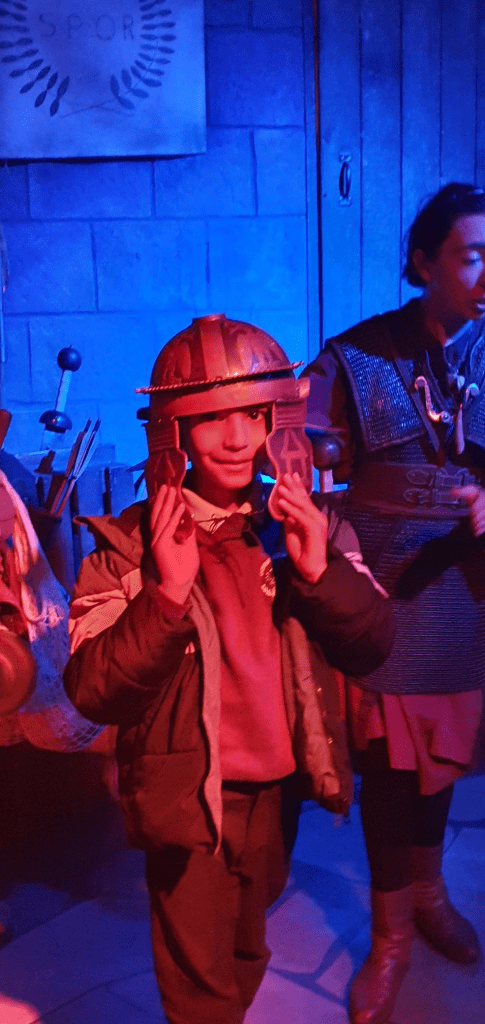
We provide a curriculum which allows children to learn about history on a local, national, and wider world scale. We ensure there is clear progression of knowledge as well as skills across all strands of the national curriculum. Our curriculum incorporates opportunities for children to become hands on with history, using a range of sources of evidence, experiencing trips and welcoming visitors in order to enhance and bring to life events of the past. We provide opportunities for children to use a range of sources and websites and ensure that library books are available for children to develop their cross-curricular reading. The substantiative knowledge content we have selected has been carefully planned to ensure that children have ample opportunity to revisit existing knowledge and build new knowledge alongside this. In addition to this, the key concept of chronology is regularly revisited and embedded within our blocks by making carefully planned curriculum links across year groups. The curriculum is also carefully planned to ensure systematic progression through key concepts and that links are made to key vocabulary and concepts. Our concepts are threaded throughout our blocks and displayed on our knowledge organisers. We aspire for our children to think like historians and to observe, collect and present data to support their viewpoints.
We make purposeful cross-curricular links which supports children in their application of knowledge in a variety of different mediums.
Implementation
The teaching and implementation of the History Curriculum is based on the National Curriculum ensuring a well-structured approach to the subject. Our history offer ignites children’s natural curiosity as historians to make observations and draw on prior learning. We promote a culture of collaboration and an environment where children are not afraid to make predictions or ask questions. Detailed long and medium planning is in place to ensure engaging curriculum content and systematic revisiting of our chosen key concepts structured using CIRCA (Chronology, Investigating evidence, Researching significance, Changes and continuity) Throughout each block of study, teachers carefully plan to embed and assess the children’s knowledge through the use of a range of retrieval strategies. These include reading tasks, extended writes, quizzes, knowledge organisers. We ensure application of knowledge in various contexts, adapting lessons where necessary so that children develop schemas and both substantive and disciplinary knowledge is stored in the long-term memory. Assessment takes place throughout each unit of work through lesson outcomes and hot tasks. Teachers track progress and attainment against the National Curriculum expectations and the knowledge and skills progression documents. Teachers use this information to inform future lessons; ensuring children are supported and challenged appropriately. The children’s achievements are celebrated on their end of year report to parents. Judgements are made on their effort, achievement, and progress within History.
Impact
By the end of each key stage 2, pupils will…
· know, apply, and understand the matters, skills and processes specified in History National Curriculum programme of study.
· have a coherent knowledge and understanding of Britain’s past and that of the wider world because they have regularly revisited our key concepts across a range of contexts and well sequenced units of work.
· demonstrate a deep understanding of chronology and how time period link and change.
· talk with confidence about what they have learned, using correct terminology.
· be enthused and interested in History.
· show adults examples of their learning and describe the ‘why’ behind work they have produced.
· demonstrate good learning behaviours in all lessons.
· be able to explain how their learning within History builds on previous learning.
· access, enjoy and make progress within the curriculum – regardless of their starting points, or any additional needs they may have.
 Donnington Wood Church of England Junior School